Tesla Targets Late 2027 for Optimus Humanoid Deliveries Amid Hand and AI Hurdles
CEO Elon Musk acknowledges that the robot's dexterity and software remain unsolved, pushing external sales back while competitors like XPeng and Boston Dynamics advance their own production lines.
By Amy Swan ·
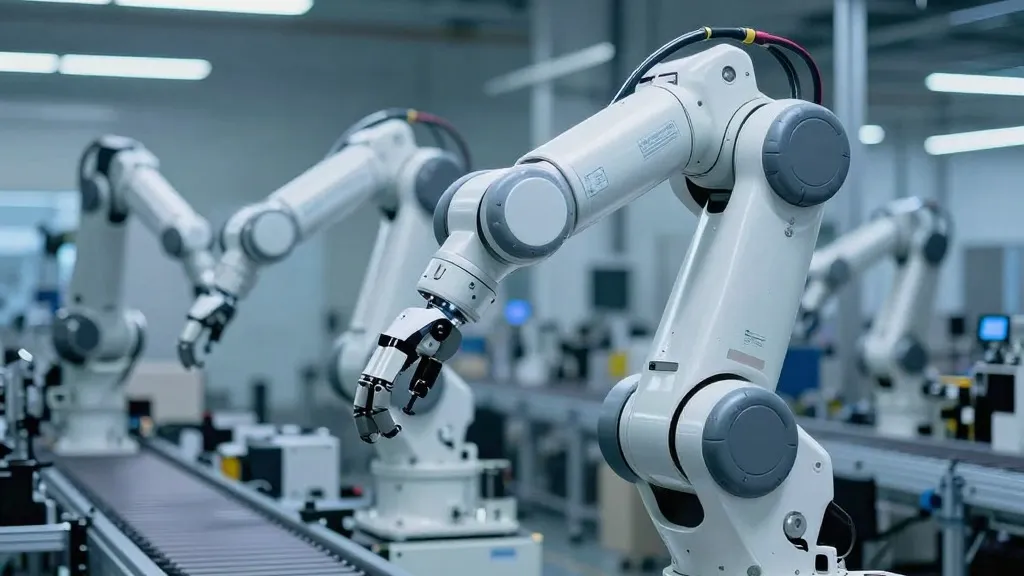
Tesla has officially moved its goalpost for commercial humanoid robots, with CEO Elon Musk stating that deliveries to outside customers will not begin until the end of 2027.
During the company’s Q3 2026 earnings call, Musk outlined the specific technical barriers preventing an earlier launch. He identified three critical areas requiring development: the robot’s artificial intelligence, its electromechanical durability, and the complexity of its hands. These challenges are not unique to Tesla; they represent the primary hurdles facing the entire humanoid robotics sector. While Musk argued that no competitor is close to matching Tesla’s progress, the market suggests a more competitive landscape.
The production infrastructure is already in place. Tesla has initiated early production of the Optimus on its high-volume Fremont line, a facility previously used for the Model S and Model X. Most of the equipment required to manufacture a million units annually is installed. However, Musk noted that reaching a production rate of 20,000 units per week will take at least a year, potentially longer, due to ongoing design changes. The company expects these issues to be resolved by late 2027, at which point it plans to supply industrial clients with robots for dangerous or repetitive tasks.
The hand remains the most significant hardware obstacle. A Tesla engineer explained that the fingers must be soft enough to handle delicate objects yet durable enough to withstand constant wear, a challenge complicated by the fact that robots cannot heal like human skin. Custom gears also present reliability concerns. On the software side, Tesla lacks a large fleet of robots to collect training data, similar to how its vehicles gather data for Full Self-Driving. To address this, the company plans to build 10,000 to 20,000 robots for an "Optimus Academy" where they will practice tasks, and it aims to integrate its AI5 chip into the units by April 2027.
Competitors are making comparable or faster progress. XPeng activated an automated production line for its IRON robot in Guangzhou in September, with plans for mass production by the end of 2026 and deliveries in the first half of 2027. Similarly, Boston Dynamics began producing its electric Atlas in January and has committed all 2026 deployments to clients, including Google DeepMind. Boston Dynamics has taken a pragmatic approach to the hand problem by prioritizing sturdy industrial grippers over human-like dexterity, a strategy that sidesteps the specific issue holding back Tesla.
The timeline for Optimus has slipped repeatedly. In 2024, Musk predicted internal use in 2025 and high-volume external sales in 2026. By January 2025, he claimed several thousand robots would be doing useful work by year's end, a goal he later admitted was not met. The current Q3 shareholder letter describes the latest Fremont output as the first "production-quality" units, implying previous versions were prototypes. While Musk promised a video of unscripted robot tasks within two months, the history of delayed timelines raises questions about whether late 2027 will hold firm.
Ultimately, the challenge for Tesla and its rivals is not merely building robots, but making them useful and reliable enough to justify their cost. While Tesla may have the highest production capacity, the lack of generalization in AI and the fragility of hardware remain industry-wide problems. As electricity costs rise and demand for automation grows, the race to deliver a durable, intelligent worker is intensifying, with multiple players now converging on the same late-decade milestones.
Source: Electrek